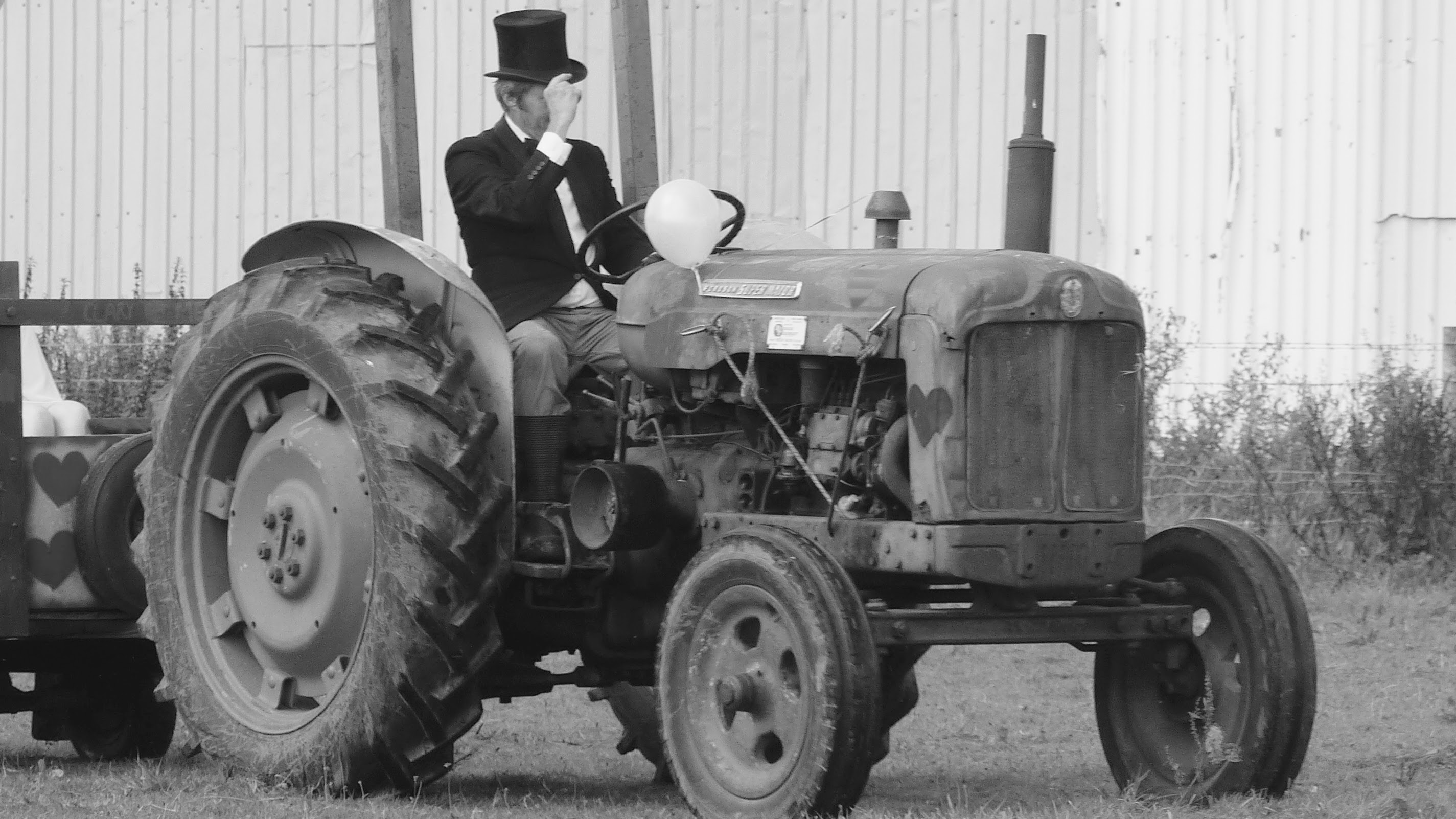
My first job was driving a tractor on a farm. I was the junior, the trainee. I got the lowest skill jobs. I mucked out chickens. I nursed sick puppies from the pack of beagles. I moved bales of straw from one barn to another. I swept the barns. All I needed for this was an ancient Ferguson tractor and sometimes a small trailer.
Step by step, I Iearned by doing and watching. The other workers tried to make a fool of me sometimes. They sent me on false errands like fetching spirit level bubbles and changing diesel engine spark plugs. Step by step, I became part of the team.
I had gained the trust of the team of doers by doing.
In early autumn, I had graduated to a big tractor, I was asked to take a spring tine harrow out to prepare a field for sowing. The harrow had been placed on wet ground some months ago. It had sunk into the ground at an angle. Over a hot summer, the ground had hardened.
I found the farm manager talking to some other workers. He said he would show me how to get the harrow attached. He gave the foreman a look – you should have taught him this. The foreman just smiled.
The group of workers sensed some entertainment. They followed us to the harrow. They watched as the university educated, son of the landowner struggled. After 15 minutes of sweat and swearing, he stormed off, his face red with exertion and embarrassment.
The foreman got into the tractor, attached one arm to the harrow. He rocked the tractor gently. Enough movement to loosen the compacted soil around the harrow tines but without damaging the tractor or the harrow. He attached the other arm, more gentle movement and then the third arm.
Shortly afterwards, I drove the tractor and harrow past the farm manager.
The lesson stayed with me.
I have seen repeatedly how small critical details that are overlooked by leadership and change teams derail major change programmes.
I have seen a global ERP roll out stall for months because no one in the change team understood how different factories weighed materials in different ways. Data changes, SOP changes, training, code changes all resulted. Business case severely eroded.
I have seen call centres closed and staff laid off before the promised productivity gains were achieved. Why? The project team descoped “minor” functionality changes that improved call centres volumes by 30%.
I have seen how locking down a desktop for security reasons created over 300 hours of work per day for a retailer.
I have demonstrated how scanning procedures for loading trucks would reduce load accuracy rather than improve it. The procedure designer had not talked to the truck drivers to understand how they work and what they were measured on.
Managers and change teams sometimes think they know best and do not consult those that do.
Leave a Reply